Via Negativa
In a world that grows more complicated and crowded every day, the ability to think clearly and see the essence is worth more and more. And there is one thinking pattern that helps with this: Via Negativa (the way of negation).
The essence of Via Negativa: If you want to improve your results in some part of your life, instead of thinking about what to do, try taking the path of negation (Via Negativa). In other words, look for the answer to the question of what not to do.
Via Negativa in practice: If you want to improve your health, instead of “Which medicine should I take?” (adding something to your life), ask yourself, “What should I remove from my life?” (smoking, eating harmful things…).
If you want to save money: “What should I cut back on?” Wandering around town, spending money on things you don’t need.
If you want to improve your time management, think about where not to spend your time.
I think it’s clear: in any field — business, personal growth, mental health, productivity, problem solving… In any situation, thinking about the question “What can I remove?” may prove more useful.
Via Negativa in thinking
We often can’t find a clear answer to some of our questions. In that case, you can flip the question into the negative, find the answer, and then turn it into its opposite. It’s as if we’re looking from a different point of view. There’s a chance we’ll find a solution.
Example: “I want to become a better writer.”
What do you need to do to get there? Some people might start reading books about writing, live the way writers live, take up a coffee habit. Or they might take the Via Negativa path and ask, “What’s stopping me from writing well?” From there: “What would make me start writing worse?” → “What would make sure nobody reads me?” (We turned the question completely around into its negative form.)
- If I don’t write, nobody will read me.
- If I write meaninglessly, nobody will read me.
- If I write boringly, nobody will read me.
We invert these (turn them into their opposites):
- I’ll try to write a lot.
- I’ll focus on meaning.
- I’ll fill the meaning with interesting examples.
It’s as if a minimal must-do list has appeared. To start with, we have a rough idea of what to do.
Examples of Via Negativa
In fact, this kind of thinking is common. Essentially, highly effective people use it. If you start using Via Negativa consciously, it becomes a habit, and you start seeing more solutions to problems. Below are a few examples.

I take the stone and remove everything that isn’t needed.
Michelangelo
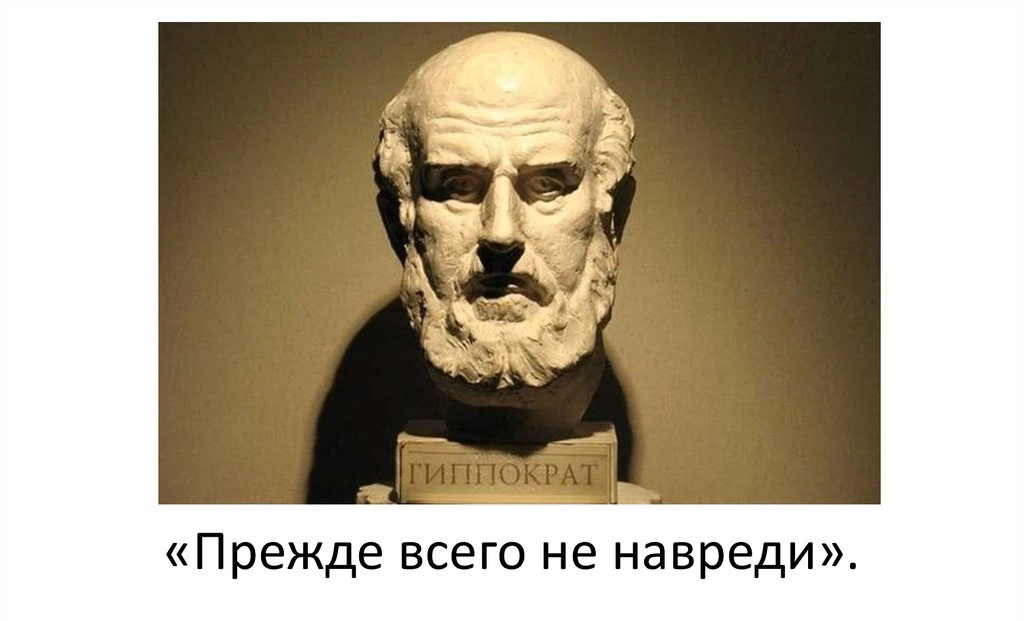
First, do no harm.
Hippocrates

People think focus means saying yes to the thing you’ve got to focus on. But that’s not what it means at all. It means saying no to the hundred other good ideas that there are. You have to pick carefully.
Steve Jobs
“If you can’t do good, at least do no evil.”
Alisher Navoi
It turns out there’s even a rule like this in our fiqh:
Preventing harm takes precedence over bringing benefit.
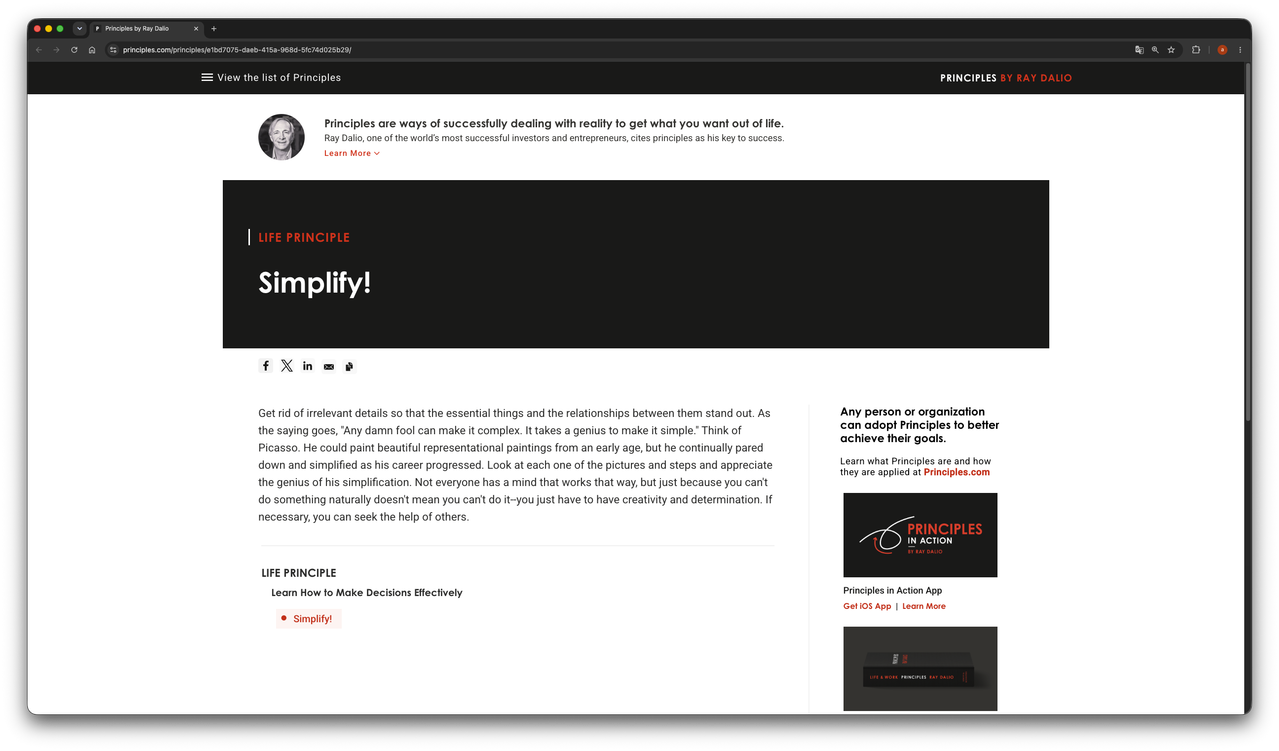
Ignore the unimportant details so the important things and the relationships between them can be clearly seen. As the saying goes, “Any fool can make something complicated. It takes a genius to make it simple.”
Ray Dalio
Conclusion
Via Negativa has been around since ancient times, and highly effective people have always used it. Today we can’t rely on much. A great deal of false information and desires try to get planted in our heads. In this situation, even just knowing what not to believe is a big help. That’s why Via Negativa helps us simplify a complicated world and keep from being led astray.